
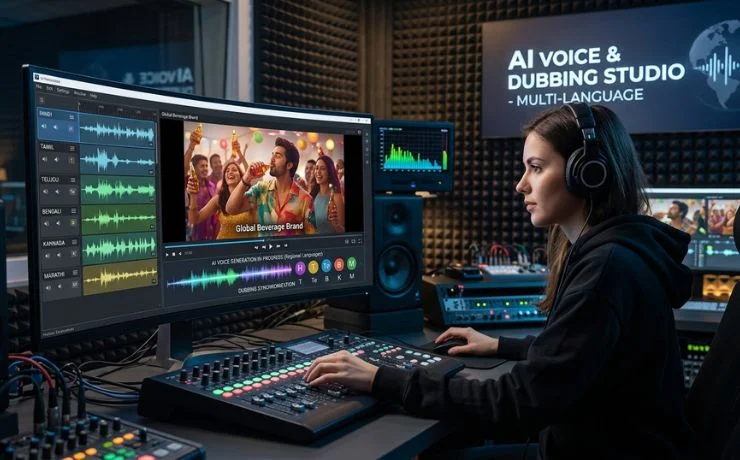
AI Dubbing, Subtitles and Voice-Over: The Rise of Multimodal Video Localization
Video is now the most popular way to learn, shop and be entertained online. Brands publish explainer videos, ads, training modules and social reels every day. But a video in one language reaches only part of the audience. Video localization helps your content connect with viewers across languages and regions.
What Is Multimodal Localization?
Multimodal localization adapts every layer of a video: spoken audio, on-screen text, subtitles, graphics and cultural references. Industry reports for 2026 name multimodal translation across voice, video and visuals as one of the fastest-growing areas in language services.
The Three Core Methods
- Subtitles
Subtitles are text translations displayed on screen. They are cost-effective, quick to produce and ideal for social media, where many viewers watch without sound. Good subtitling requires accurate timing, readable line length and consistent terminology.
- Dubbing
Dubbing replaces the original audio with a translated voice track. It offers a more immersive experience and suits films, series, advertisements and e-learning. AI dubbing now speeds up production and reduces cost, especially for large volumes of content.
- Voice-Over
Voice-over adds a narrator speaking the translated script, usually over the original audio at a lower volume or in place of it. It is common in corporate videos, documentaries, product demos and training content.
AI Dubbing vs Human Voice Artists
AI tools can generate synthetic voices quickly and at scale. They work well for internal training, quick-turnaround updates and content with a limited budget. However, human voice artists remain essential when emotion, humour, brand personality and natural delivery matter, such as in advertisements, storytelling and customer-facing campaigns.
The most effective approach is a hybrid workflow: AI for speed, and human linguists and voice professionals for quality review and emotional impact.
Video Localization Checklist
- Script translation and adaptation: Translate for meaning and culture, not word for word.
- Timing and lip-sync: Make sure the translated script fits the video’s pacing.
- On-screen text and graphics: Localize titles, captions, charts and images.
- Subtitle accuracy: Check spelling, timing and reading speed.
- Voice selection: Choose voices that match your brand tone and the audience’s expectations.
- Audio quality: Maintain clean sound mixing and consistent volume.
- Final quality review: Have native speakers review the finished video.
Industries Benefiting from Video Localization
- E-learning and corporate training: Employees learn faster in their own language.
- Marketing and advertising: Regional ads drive higher engagement.
- Entertainment and OTT: Dubbing and subtitles open new viewing markets.
- Healthcare and pharma: Patient education videos need clear, accurate language.
- Manufacturing and automotive: Product demos and safety videos must be easy to follow.
Common Mistakes to Avoid
- Relying only on machine translation without human review
- Ignoring cultural references and humour
- Using poor-quality audio or mismatched voices
- Forgetting to localize on-screen text
- Not planning the script length for languages that expand or shrink
Why Choose Get Any Language?
Get Any Language provides end-to-end video translation services, including subtitling, dubbing, voice-over and multimedia localization in Indian and international languages. Our certified linguists and audio specialists ensure accuracy, natural delivery and on-time delivery for every project.
Final Thoughts
Video localization is no longer optional for brands that want a global or pan-India presence. By combining AI efficiency with human expertise, you can deliver videos that feel natural in every language.
Want to take your videos to new audiences? Contact Get Any Language for a free quote.


